
Category: Design

  • 5 WAYS TO MAKE A NOTABLE FIRST IMPRESSION IN ENTRYWAYS WITH CEILING TILES
    5 WAYS TO MAKE A NOTABLE FIRST IMPRESSION IN ENTRYWAYS WITH CEILING TILES
    69 Views

    The entryway is the first interior space anyone sees upon entering a home or commercial building. It sets the mood. Most entryways receive careful attention at eye level: the console table, the artwork, the flooring material, etc. But the ceiling gets the same white paint applied everywhere else.

    Ceiling treatment in an entryway is one of the most effective and underutilized design elements. Precisely because visitors aren’t expecting it.

    Here are some ways to achieve that:

    Select a pattern that frames the space, but not overwhelms it

    Entryways are generally small. The ceiling height in a small room appears close. This proximity makes it possible to see and enjoy fine detail in a tile pattern, which normally would be lost at distance.

    Entryways are an ideal place for ceiling tile panels featuring:

    • Geometric relief patterns
    • Subtle floral motifs
    • Clean linear detailing

    These elements add visual interest.

    However, select a pattern that’s appropriate to the room’s size. A large repeat pattern in a small entryway will feel cluttered. But a smaller pattern will look refined and intentional.

    Use paint to unify the ceiling with the wall color

    You want the ceiling tile installation to appear deliberate, rather than a decorative add-on. So, paint it a similar color to the walls or cornice. This treatment allows the ceiling to feel like an extension of the room’s envelope.

    Layer the ceiling treatment with a statement light fixture

    There are two things that always complement each other in an entryway:

    Read More: Designing Home Finishes With Tiling Solutions That Actually Respect Your Life

    • A ceiling tile installation
    • A well-chosen light fixture.

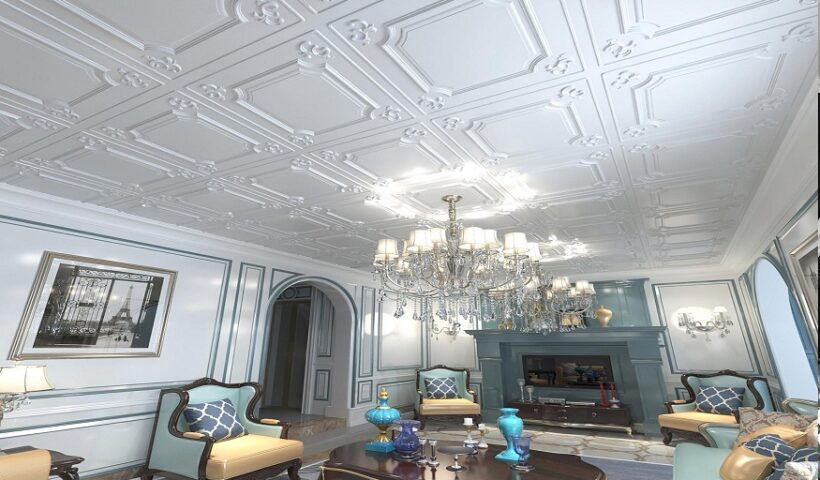
    A pendant or chandelier creates a relief pattern of the tiles. It makes it more visible. The fixture itself provides an architectural background that lends a sense of purpose to the ceiling compared to a flat ceiling.

    Install tiles in a defined zone, not edge-to-edge!

    Maybe the entry is directly connected to a larger adjoining room. It makes sense to install ceiling tiles in the entryway within a defined area. It could be framed off by cornice or a subtle reveal. This provides a point of entry that implies it is a specific area.

    This type of zoning is well suited for situations where:

    • The ceiling height of the entryway room is different from the ceiling height of the adjacent room
    • A soffit or architectural feature is already present as a natural barrier

    Consider metallic or lacquered finishes for maximum impact

    These finishes reflect both natural and artificial light around a space. They create a sense of luminosity that makes a small entryway feel much larger than its actual dimensions suggest.

    Consider pressed metal tiles with:

    • Brushed brass
    • Aged copper
    • Polished nickel finishes

    They capture light from various angles throughout the day and provide a dynamic visual character.

    Read More: Earth-Born Tile Systems for Rustic and Classic Interior Design

    The last word

    A ceiling tile treatment in an entryway can offer your space the much-needed character. The surprise of looking up at something genuinely considered creates an impression that lingers well beyond the first visit.Treat it as a true design element, and the doorway becomes the kind of area that leaves a lasting impact.

  • Designing Home Finishes With Tiling Solutions That Actually Respect Your Life

    Designing Home Finishes With Tiling Solutions That Actually Respect Your Life

    142 Views

    A finished room is a performance; living in it is the truth.Most design advice treats your home like a static display case. It obsesses over the “reveal” and the perfect wide-angle shot for social media. But here is the radical reality: A home that only looks good on day one is a design failure.

    The real test of your space doesn’t happen when the contractors leave. It happens on a Tuesday morning when the coffee spills, the dog tracks mud across the floor, or you’re rushing to get out the door. If your home isn’t built to absorb the mess and chaos of a real human life, it isn’t a home—it’s a museum exhibit.

    It’s time to stop designing for the showroom and start designing for the living room.

    1. Go for Tiling Materials That Respect Your Home’s DNA

    Tiling solutions are a critical part of your home’s intersection of architecture, aesthetics, daily rituals, and the rhythm of the people who live inside. To avoid this disconnect, the selection process must be treated as an act of translation. You are translating the physical bones of your home into a language that supports your daily rituals.

    Read More: Earth-Born Tile Systems for Rustic and Classic Interior Design

    For example, a home’s era and scale provide the baseline for your tile choices. If you install hyper-modern, sterile tiles in a historic, artisanal home, you create dissonance. Instead, look for materials that echo the building’s original logic—whether that is the structural geometry of the era or the tactile nature of its original materials.

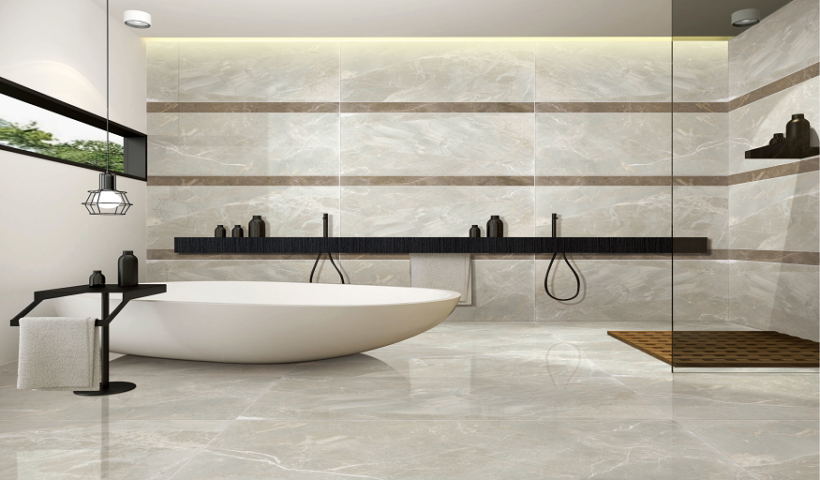
    A quality ceramic shower tile, for example, helps execute successful projects that bridge the gap between architectural respect and honoring the daily rhythm of your home. The tiling solution helps achieve moisture-sealed integrity required for a wet environment while mimicking the texture of natural stone or the sleek, clean lines of modern design.

    2. Your Home Is More Than a Pretty Space, It’s a Life-Supporting Asset

    The most radical thing you can do for your home is to prioritize your habits over “the look.”Every time you fall in love with a Pinterest photo, ask yourself: Does the person in this photo have a toddler? A high-shedding dog? Do they actually cook, or is that kitchen just for show?

    Instead of blindly following a tile showroom display, lean into showroom expertise. This is because perfect displays showcase trends; but experts take it further to showcase performance.

    If you live hard, build hard. Don’t apologize for choosing durability over a delicate finish. For example, high-traffic porcelain isn’t “boring,” it’s freedom from worrying about every scratch.Also, if you want an effective space that functions as a “sensory buffer” against the outside world, grounded and tactile solutions like matte surfaces and muted, earthy tones become foundational. They absorb light and quiet the visual clutter that keeps your nervous system on edge.

    3. Design Flooring as the Invisible Architecture

    Most homeowners have been sold the idea that open-plan living means everything must be the same. That is a myth that leads to chaotic, ungrounded spaces.You don’t need a wall to create boundaries. In fact, real design happens when you use the floor to choreograph how people move through a house.

    Read More: Exploring Artistic Expression Through Pool Tile Designs

    A subtle shift in tile texture or a deliberate transition in pattern creates “zones” that our brains naturally recognize. It gives you the openness of a modern home with the organized, calm flow of a traditional one.

    It’s about making your home “legible.” When you walk through your front door, the floor should intuitively tell you where to drop your bags, where to cook, and where to rest.

    4. Beautiful Choices Are in the Resilient Quiet Details

    Choosing tiles is often an emotional decision. Keeping them beautiful is an engineering decision. The greatest compliment a tiled space can receive isn’t, the amazing immediately after installation.” It’s, “We’ve never had a problem.”

    There is something deeply satisfying about a room that simply works. No loose tiles, no mysterious cracks, no leaks hidden behind the walls. Just quiet, steady confidence, year after year. That is what craftsmanship looks like. It isn’t about demanding attention—it is about providing dependability.

    They’re remembered because they continue to perform quietly, year after year, with very little asking in return. The real quality isn’t in the part of tile that is easy to see—the pattern, the color, and the finish of the tile; it’s in the grout, the texture, and the transition.

    For example:

    • Matching grout is a declaration of seamlessness. It says you value flow over fragmentation.
    • Contrasting grout is a declaration of structure. It says you respect the architecture and aren’t afraid of geometry.

    These aren’t technical afterthoughts. They are the final brushstrokes that separate a space that “looks finished” from a space that “feels resolved.”

    5.   Build for the Long Game

    Plain trends without a backup of technical performance are a trap. They are designed to make you feel dissatisfied the moment something new hits the market.However, radical design is about permanence. When you stop chasing the “next big thing” and start ensuring your tile isn’t just pretty, but actually fits the moisture, traffic, and structural requirements of the room, you create something that doesn’t age.

    That means you build a space that doesn’t just hold your furniture, but holds your life.That is how you turn a structure into a home.

    In essence, one of the inherent measure of a successful tiling solution is how seamlessly it integrates into your daily life and remains unnoticeable, while rarely having to think about it. When you rely on a reliable tile store, you seamlessly achieve the ultimate goal of “invisible” design: the tiles perform their job by repelling water, anchoring the room, and providing comfort, so perfectly that they become a background element you no longer have to manage or worry about.