Are you tired of staring at outdated cabinets and a cluttered countertop? Upgrading your cooking space is one of the most exciting home improvement projects you can take on. A beautiful, highly functional cooking area completely changes how you interact with your home. You gain more storage, better organization, and a gorgeous backdrop for entertaining friends and family.
However, before you start tearing down cabinets, you need a solid understanding of the financial side of the project. The choices you make early on will dictate exactly how much you end up spending. This guide breaks down exactly how different elements influence your total bill. You will walk away knowing how to balance your budget while still getting the gorgeous, modern aesthetic you really want.
Breaking Down the Elements of Your Kitchen Budget
When you buy a traditional kitchen, you often pay for standard cabinetry and hope it fits your space. A modular setup works entirely differently. You purchase individual units, or “modules,” that fit together perfectly to match your specific room dimensions. Because you build the room piece by piece, the final price tag depends on exactly what pieces you choose to include.
Your total bill consists of several different moving parts working together. You have to account for the internal cabinet boxes, the exterior doors, the hardware that makes everything move, and the countertops. Every single one of these categories offers budget-friendly baseline options and premium luxury upgrades. Understanding these categories is the first step in controlling your overall budget and getting the best value for your hard-earned money.
Read More: Exploring Artistic Expression Through Pool Tile Designs
How Layouts Dictate Your Modular Kitchen Design
The shape of your room plays a massive role in your final budget. A thoughtful modular kitchen design maximizes your workflow, but larger layouts naturally require more materials. If you have a simple, straight-line kitchen along a single wall, you only need a handful of cabinets. This keeps your expenses relatively low and makes the installation process incredibly fast.
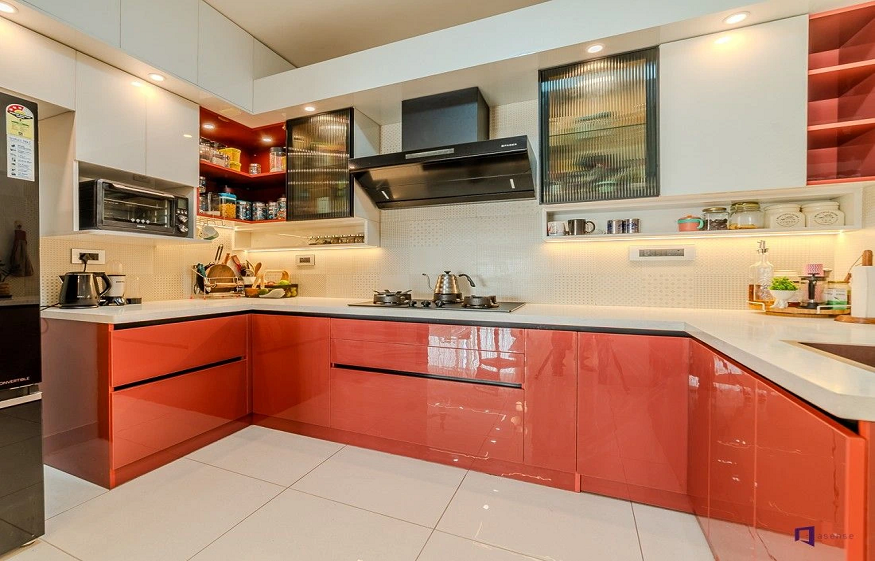
On the other hand, a sprawling U-shaped layout requires significantly more units. You will need corner modules, expansive countertops, and extra wall cabinets to fill the space. If you want to add a massive central island for seating and prep work, you will need to increase your budget even further. Always map out your daily routine and workflow before committing to a massive footprint that you might not actually need.
Choosing Core Materials for Cabinets and Counters
The materials hidden behind your cabinet doors affect both the lifespan of your kitchen and your wallet. If you want to keep your modular kitchen cost down, you might lean toward engineered woods like particleboard or medium-density fiberboard (MDF). These materials work great in dry areas and offer a very budget-friendly starting point.
However, kitchens deal with a lot of moisture and heat. Upgrading to boiling waterproof (BWP) plywood for your core cabinets adds to the initial price but prevents costly water damage over time. When it comes to countertops, standard granite offers incredible durability at a reasonable price point. If you prefer the pristine, uniform look of quartz, expect a noticeable bump in your overall material expenses.
Read More: Coastal Charm Meets Suburbia: Houses for Sale in Monterey, Westlake Village & Lemon Grove
Stunning Surface Finishes and Aesthetics
The exterior finish you select determines exactly how your kitchen looks to guests. Laminate is the most popular and cost-effective finish available today. It comes in hundreds of colors and wood grain patterns, allowing you to achieve almost any aesthetic without spending a fortune. Laminate resists scratches well and cleans up easily with a damp cloth.
If you dream of ultra-glossy, mirror-like cabinets, you will likely look at acrylic finishes. Acrylic reflects light beautifully and makes small spaces feel much larger. However, this premium finish will noticeably increase your sleek kitchen price. Acrylic requires more maintenance to keep fingerprints at bay, but the luxurious visual impact is completely undeniable for modern homes.
The Hidden Costs of Hardware and Accessories
Never underestimate the power of good hardware. The hinges, drawer runners, and handles might seem like small details, but they drastically change how your kitchen feels. Standard hinges get the job done, but upgrading to soft-close mechanisms prevents doors from slamming and extends the life of your cabinets.
Internal storage accessories also impact your modular kitchen cost. Basic shelves cost very little. Conversely, adding pull-out pantry tall units, magic corner carousels, and built-in spice racks drives the price up quickly. These clever accessories offer incredible convenience by bringing items out to you, meaning you never have to dig around in dark cabinet corners again.
Smart Ways to Lower Your Expenses
You do not have to empty your savings account to get a beautiful room. One of the best strategies is mixing and matching your finishes. You can use an expensive, high-gloss acrylic on your upper cabinets where they catch the eye, and use a durable, cost-effective laminate for the lower base units. This hybrid approach gives you a premium look for a fraction of the cost.
Another great tip involves rethinking your upper wall storage. Instead of wrapping the entire room in heavy upper cabinets, install some open floating shelves. Floating shelves cost significantly less than closed cabinetry and provide a great place to display beautiful dishes or indoor plants. This keeps the room feeling airy and spacious while protecting your wallet.
Maximizing Functionality with Smart Planning
A successful modular kitchen design focuses heavily on the classic “work triangle.” This concept ensures your sink, stove, and refrigerator sit at optimal distances from one another. When you plan this triangle correctly, you minimize the number of steps you take while cooking a complex meal. Efficient planning saves you time and physical energy every single day.
Proper lighting also elevates your design without requiring major structural changes. Adding inexpensive LED strip lights under your wall cabinets completely transforms the atmosphere of the room. This task lighting makes chopping vegetables much safer and highlights your beautiful countertops. Good lighting makes even budget-friendly materials look incredibly high-end and thoughtfully chosen.
Manage Your Investment Wisely!
Taking the time to research your options ensures you end up with a space you genuinely love. You have the power to control your final sleek kitchen price by prioritizing the features that matter most to your daily life. If you love to bake, spend your money on great countertops. If you hate clutter, invest your budget into clever internal storage accessories.
Ultimately, a well-planned modular kitchen design adds tremendous value to your home. It makes daily chores feel less tedious and gives your family a beautiful central hub to gather in. Sit down, map out your must-have features, set a realistic budget, and start building the cooking space you have always wanted.