
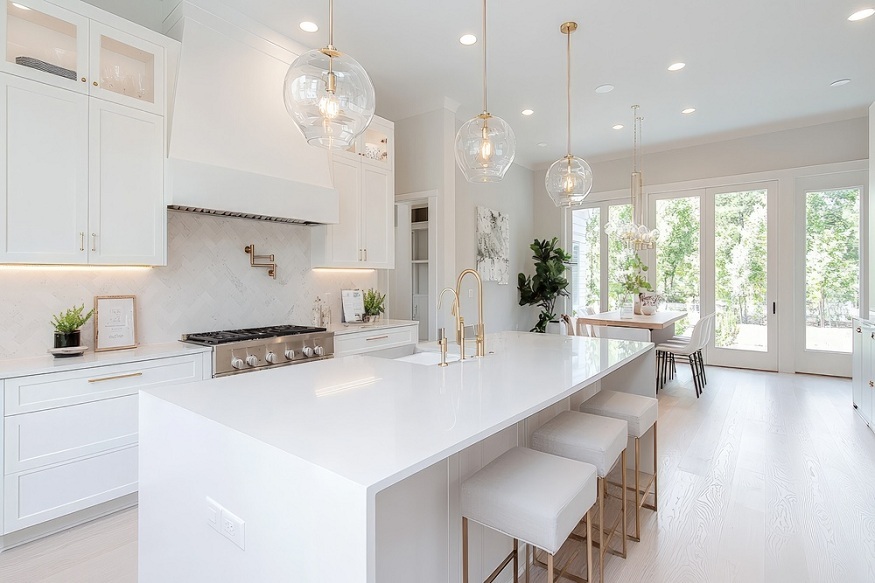
Go into any kitchen at night and turn on the light. That single moment speaks volumes. The room either bursts with energy, or it slowly fades into darkness. Designers are well aware that the key to a successful kitchen refresh is managing the lighting. Even if you spend a fortune on cabinets and tile, inadequate lighting will ruin everything.
Why Lighting Rules Everything
Light plays tricks on perception, making things seem different from what they are. That paint color you loved at the store? It looks like baby food when seen under the kitchen’s fluorescent lights. Those expensive cabinet doors? They could easily be mistaken for plastic under the wrong lighting.
Most people screw this up royally. They spend months picking backsplash patterns, then grab whatever light fixture has free shipping. Big mistake. Huge. Smart designers do the opposite. They figure out lighting before touching anything else. Once you control the light, you control how every surface looks. Countertops from a supplier such as Bedrock Quartz suddenly reveal swirls and sparkles you never noticed before. Cheap laminate starts looking respectable. Even that ancient refrigerator seems less offensive.
Here is what actually works: mixing different lights that do different jobs. Background brightness keeps you from stumbling around. Focused beams let you see what you’re chopping. Then some drama lighting makes the room feel special instead of just functional. Miss any piece and the whole thing feels wonky.
Read More:The Unseen Troubles: Common Plumbing Problems Every Homeowner Faces
The Overhead Trap
Millions of kitchens suffer from the same stupid problem. One sad ceiling dome trying to light everything. It can’t. So people cook in shadows, squint at ingredients, and wonder why their kitchen feels so depressing after dark. The fix isn’t complicated. Stick some strips under cabinets; then you can actually see your cutting board. Hang pendants over the island and suddenly that dead space becomes the spot everyone wants to sit. Even a couple of desk lamps in the right corners can save a dark kitchen.
Hanging heights matter more than people think. Pendants too high just float there doing nothing. Too short and tall people develop neck problems from dodging them. Most designers stick stuff 30 to 36 inches above counters, but sometimes you need to break rules. A big dramatic fixture might hang lower just to show off. Recessed lights need proper spacing or your ceiling looks like an airport runway.
Color Temperature Makes the Difference
White light isn’t just white. Some white light feels like a cozy fireplace. Other white light feels like a dentist’s office. Nobody explains this when you’re buying bulbs, which is criminal. Food looks disgusting under cool light. People look sick. Everything feels harsh and uncomfortable. But warm light? That makes a leftover pizza look gourmet. Skin looks healthy. The whole room feels like a hug. The problem is that warm light sucks for reading recipes or finding that bay leaf that fell behind the stove.
Read More:Range Hood: The Ultimate Guide to Cleaner Air and a Better Kitchen
LEDs changed everything, though. Old bulbs trapped you with one color forever. New ones shift from sunrise bright to candlelight soft with the push of a button. Morning prep work gets crisp, clear light. Evening dinner gets golden romantic vibes. Same fixtures, totally different kitchen.
Conclusion
Lighting beats every other kitchen detail because it changes everything else. Bad lighting turns granite into garbage. Good lighting makes builder-grade materials look custom. Designers obsess over this because they’ve watched too many gorgeous kitchens get destroyed by one awful boob light. Want a successful refresh? Stop shopping for drawer pulls and start thinking about light. Get that right, and even your mistakes will look intentional.