In modern homes, there’s a quiet backlash happening in interiors right now. Not loud, not trendy, but a retro-innovation that leverages basic materials that feel like they belong to the ground, not a factory line. People are getting tired of surfaces that look perfect on day one and emotionally flat on day two. Rustic and classic spaces are coming back for one simple reason: they don’t perform for attention, they age into it. They carry weight, texture, and memory in a way modern finishes often erase.
1. Raw Terracotta and Fired Clay as Living Thermal Surfaces
Terracotta is often misunderstood as “rustic styling,” when in reality it behaves more like a slow architectural organism.This is earth that has been heat-locked into structure, and it keeps reacting long after installation.
- It stores daytime warmth and releases it back when the house cools down
- It breathes instead of sealing, which helps interiors feel less chemically “closed”
- Waxed or lightly oiled finishes don’t hide it, they simply guide how it ages
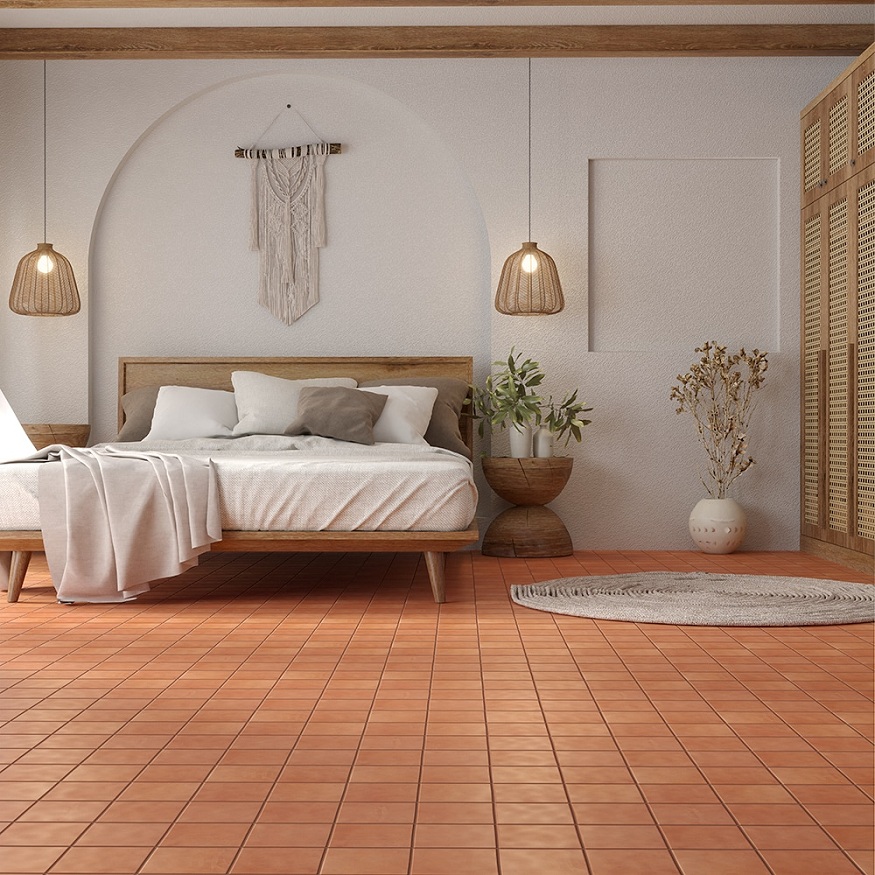
Put it underfoot in an 8×8 or 4×8 layout, or run it vertically along a sun wall, and something subtle happens: the home stops feeling newly built. It starts feeling settled. That is the genius of a Terracotta Ceramic Tile; it locks in a timeless, historic look on day one without any of the high-maintenance upkeep, offering a timeless foundation that never degrades.
Read More: Exploring Artistic Expression Through Pool Tile Designs
2. Vesicular Limestone and Travertine as Light That Doesn’t Shout
Premium materials and designs help calm a room down beyond being décor elements. Limestone and travertine are exactly that. They are not “finished” in the modern sense; they are geological records that still carry breath in their pores.
- Open-cell stone holds shadow inside its structure, not just on the surface
- Filled variants behave more formal, more controlled, more architectural
- Visible and colored records of geological history, expressed as sand, ash, and ivory leverage principles of optical physics and architectural lighting to dissolve harsh daylight instead of bouncing it back
When used in entry halls, long corridors, or courtyard transitions, these stones do something most materials fail at: they remove visual noise. The space doesn’t become brighter, it becomes quieter, furniture sits better, architecture feels less forced, and everything stops competing. These stone tiling systems quiet the space, allowing architecture and furniture to feel more anchored and balanced.
3. Pigmented Hydraulic Cement Tiles as Embedded Pattern Systems
Unlike surface-printed finishes, pigmented hydraulic cement tiles are formed by compressing mineral pigments deep into the material body itself. This creates permanence in both color and geometry.
Typical applications include:
- Entry thresholds with geometric grounding patterns
- Fireplace surrounds that require visual anchoring
- Outdoor verandas exposed to weather cycles
The design is embedded rather than applied. As such, the surface ages evenly without peeling or fading in layers; it matures as a single unified material.This makes it particularly suitable for classic interiors that rely on pattern continuity rather than temporary decorative expression.
4. Masonry-Based Layout Logic Using Interlocking Tile Geometries
In rustic and traditional design systems, layout is not just installation, it is structural storytelling. Tile geometry defines how a room behaves visually and physically.
Common systems include:
- Interlocking ashlar layouts: distribute visual weight across large open floors
- Brick bond patterns (50% offset): reinforce directional flow in kitchens and hearth zones
- Herringbone paths guide movement without signage, your body reads the floor instinctively
Instead of uniform repetition, these layouts create rhythm and variation, echoing traditional masonry craftsmanship.
Then comes the detail most people overlook: mortar joints. Wide joints (6–10mm), slightly imperfect edges, softer tonal fills, these are not flaws. They reintroduce human rhythm into machine precision. The floor stops feeling manufactured and starts feeling built.
5. Earth Tile Systems That Don’t Fight Time, They Work With It
The strongest rustic interiors aren’t frozen in time, they’re designed to survive time intelligently. That means surfaces that behaves in a manner that cooperate with heat, moisture, and use instead of resisting them blindly.
Modern earth-tile systems integrate:
- Hydronic heating compatibility for slow thermal radiation through stone mass
- Vapor-permeable sealers that protect without blocking breathability
- Oleophobic treatments (oil repelling coating) in functional zones like kitchens and dining areas
In practice, this means the surface does not simply stand rigid against change and the elements; it manages them. Stored heat is gradually released while it self-regulates moisture without sealing away the natural structure of the material. The result is a floor or wall system that remains stable, predictable, and quietly resilient.
Read More: Understanding Ballistic Panels: Essential Insights for Enhanced Safety and Security
In essence, rustic and classic interiors are no longer about imitation or decorative referencing of the past. They are built through material systems that behave intelligently under real conditions; heat, moisture, pressure, and time. When tile systems are selected with this level of awareness, they stop acting as surface decisions and become part of the home’s long-term environmental logic. However, partnering with a reputable tile store is crucial for quality integrity and aligned insights.
One Reply to “Earth-Born Tile Systems for Rustic and Classic Interior Design”